
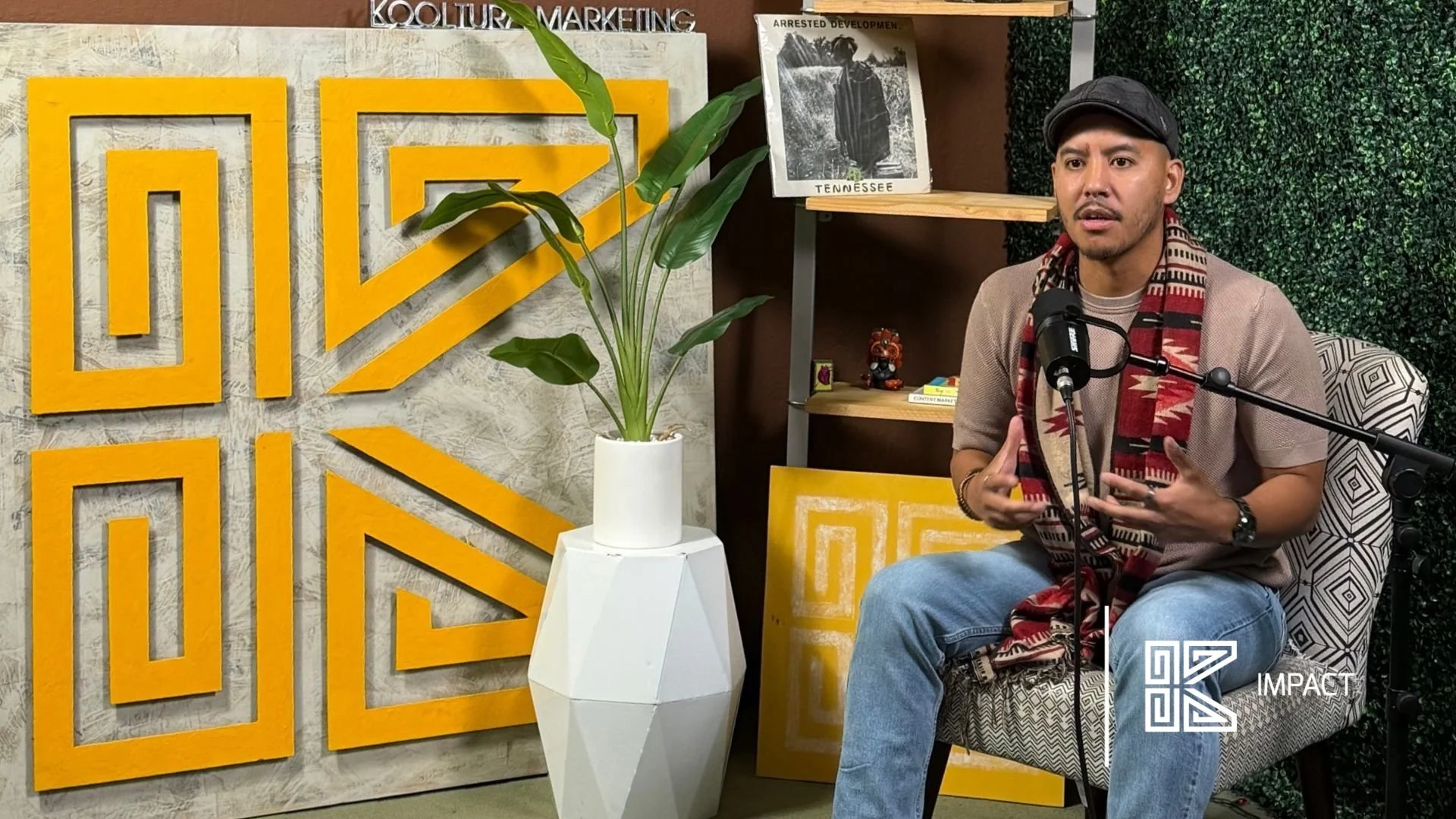
People.Culture.Community series set at EMLN Headquaters
We all carry stories with us. Some are found in the music that shapes us, the traditions we reconnect with, and the people whose lives made our own possible.
For Jonathan Francisco Borca, three meaningful items offer a glimpse into a journey shaped by cultural identity, creativity, and a deep connection to San José.
The son of a Filipino father and a Mexican American mother, Jonathan spent part of his childhood traveling with his family before returning to East San José, where his maternal grandparents helped raise him. Today, he identifies the Eastside as home, a place that has shaped his understanding of himself and the communities he is part of. As a performing artist, event producer, and community builder, he continues to invest his time and energy in the people and creative spaces that make San José what it is.
Each item he brought tells a different part of his story. Together, they reflect a belief that our identities are shaped by those who came before us, the cultures we choose to reconnect with, and the communities we help build.

YOU. The music and influences that shape who we become.
The first item Jonathan shared was a vinyl record from his favorite music group, Arrested Development. The record itself holds a personal connection: his sister gifted it to him after attending one of the group’s concerts while living in Japan. But its meaning goes much further back.
Jonathan first discovered Arrested Development through an album he found among his mother’s belongings. Growing up, music was a constant in his household. His mother introduced him to everything from Motown to Tupac and hip-hop, while his father brought in influences like rock music.
Today, Jonathan performs rap and poetry alongside jazz ensembles, from small trios and quartets to big bands and orchestras. He credits the group with shaping not only his approach to music, but also the messages he wants to share through his work.
One influence that stayed with him was the group's lead artist, Speech, and his ability to communicate without relying on profanity.
“He taught me that, like, you can communicate in your music without having to resort to language or using profanity.”
That influence continues to show up in the way he approaches his own work and the kind of person he hopes to be. For Jonathan, music became more than an artistic outlet. It helped shape the values and perspective he carries into the world.
CULTURE. Reconnecting with the roots that are already within us.
For his second item, Jonathan brought a copalero, an object connected to Indigenous traditions and his own exploration of culture and spirituality.
As someone with Filipino and Mexican roots who was not raised speaking Spanish, Jonathan understands that cultural connection does not always come through language or a direct experience with tradition. The item serves as a reminder that history and ancestry remain part of us, even when we have not always had access to those connections growing up.
“It’s a reminder that, like, you’re connected to culture, you have a history and you have ties, even if you weren’t presented with them in your upbringing.”
Jonathan describes this relationship as a form of chosen culture. He has spent time exploring what spirituality means to him and finding ways to reclaim parts of his identity without feeling that he needs to fit a particular definition of what it means to be Filipino, Mexican, or first-generation.
For him, reclaiming culture is also about recognizing that everyone has a different relationship with their heritage.
COMMUNITY. The generations that make us who we are.
The third item Jonathan brought was a photograph of his grandfather, Joseph, a World War II veteran whose family roots trace back to Calexico, California.
For Jonathan, the photograph is a reminder that his life is part of a much longer story. His grandparents played a significant role in raising him and his siblings, providing the support and stability that helped shape the opportunities he would have later in life.
“There is no me without connection to family.”
The photograph also carries a deeper understanding of the experiences passed down through generations. Jonathan recalls learning that his grandfather would hide in a corner to eat a burrito at school because he was bullied for it. That experience helped him understand why his mother was not taught Spanish and how the effects of discrimination can shape what families pass on to their children.
It is a perspective that has encouraged Jonathan to be more thoughtful about how people relate to their cultural identities. Rather than judging someone for not speaking their ancestral language or knowing certain traditions, he recognizes that there is often a history behind that distance.
He also thinks about the responsibility of being part of a lineage that extends both backward and forward. Inspired by the idea of thinking seven generations ahead, he considers how the choices he makes today may affect the generations that follow him.
“We're generations in the making and we're generations to follow.”
Connectedness. A story that continues to grow.
When asked what the three items reveal about him together, Jonathan returns to one idea: connectedness.
The vinyl represents the music and influences that helped shape him. The copal reflects his ongoing relationship with culture and spirituality. The photograph connects him to the family and generations that came before him. Each object represents a different part of his journey, but none exists on its own.
That same sense of connection guides the way he shows up in San José's creative community. Jonathan is proud to be part of a local network of artists and creatives who use their work to bring people together. Through performing, event production, and community building, he sees creativity as something that can offer a way to move beyond the circumstances we are given.
Jonathan's story is a reminder that we are never shaped by one experience or one part of our identity. We are connected to the people who raised us, the traditions we continue to discover, and the communities we choose to invest in. And as we grow, we have the opportunity to carry those connections forward while making space for the generations and stories still to come.
Watch Jonathan Francisco Borca’s full conversation in People.Culture.Community., a Kooltura Series exploring the people, traditions, and communities shaping our cities.
